Research topic · Kansas City

Causal Inference & Simulation

Causal inference asks what would have happened under a different decision, which is the question behind every budget, pilot and policy. Correlation answers a different question. The research here works through the methods analysts actually use, from difference-in-differences and synthetic control to matching, instrumental variables and causal discovery, in Python, and tests each one on simulated data where the true effect is known.

What the research covers

  • Quasi-experiments: difference-in-differences, synthetic control, regression discontinuity and interrupted time series
  • Adjustment and matching: DAGs, the backdoor criterion, propensity scores and uplift modeling
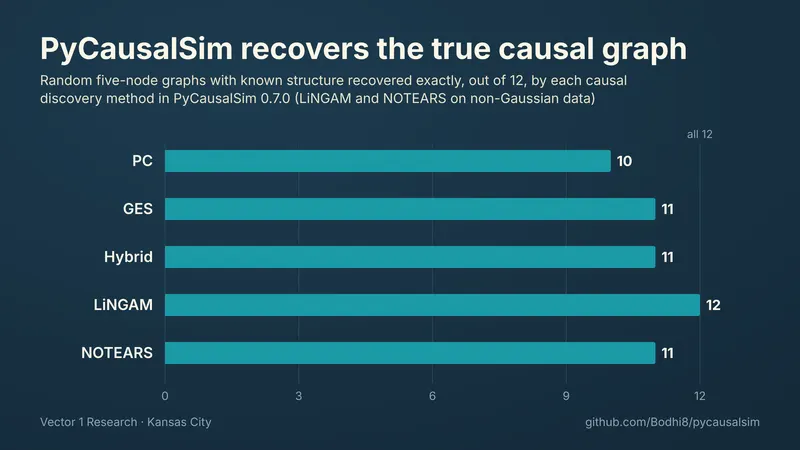
  • Causal discovery and simulation with PyCausalSim, the open-source library built here
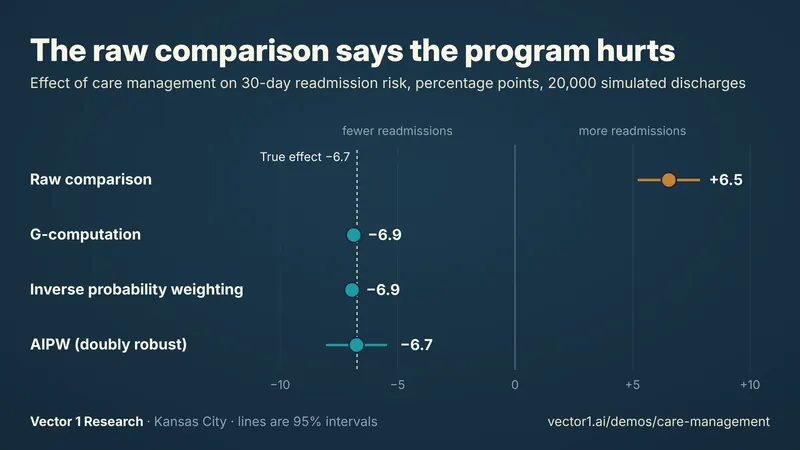
  • Program and pilot evaluation: did it work, by how much, and how sure can we be

Discuss this research

For inquiries regarding PyCausalSim, Papilon, research citations or technical discussions, reach out directly at [email protected] or connect via GitHub and LinkedIn.

Contact Brian

Try it: interactive demos

More on Causal Inference & Simulation

Related research topics

Common questions

What is causal inference, and how is it different from correlation?

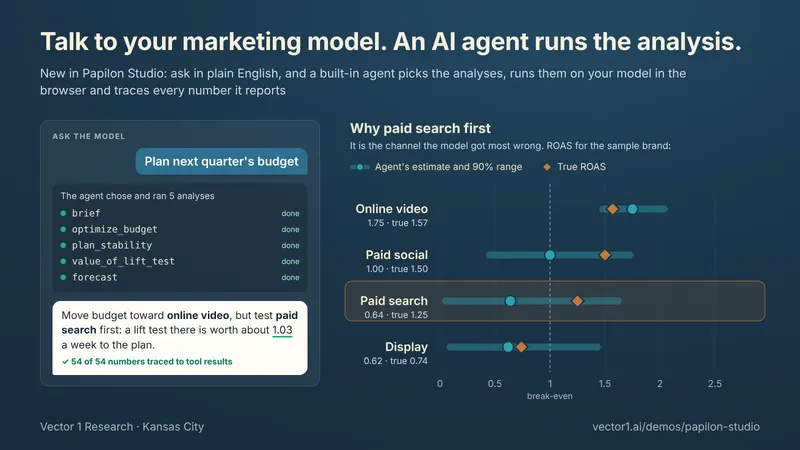
Correlation says two things move together. Causal inference estimates what an outcome would have been under a different action, using experiments, quasi-experiments or models that adjust for confounders, the factors that drive both the action and the outcome. Two channels or programs can show the same correlation and have very different true effects.

Which causal method fits which situation?

Difference-in-differences compares a treated group's change with an untreated group's change over the same period. Synthetic control builds a weighted comparison from several untreated units when there is one treated unit, such as a city or a region. Regression discontinuity uses a cutoff that decides who is treated. Instrumental variables use a factor that moves the treatment but affects the outcome only through it. Matching and propensity scores compare like with like when treatment was not assigned at random.

Can you do causal inference in Python?

Yes. Libraries such as DoWhy, EconML and PyCausalSim, the open-source causal discovery and simulation library built here, cover estimation, discovery and simulation. The articles here include the code, and the PyCausalSim demo runs in your browser.

How do you prove a pilot or program worked?

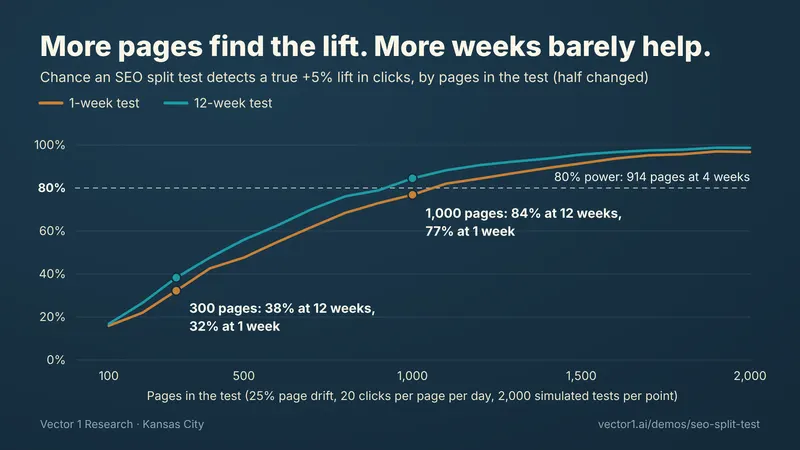
Compare it with what would have happened without it: a holdout group, a staggered rollout or a comparison built with difference-in-differences, with enough data to detect the effect you care about. The AI pilot ROI demo measures one pilot three ways on data with a known true effect, and shows how far the answers differ.