AI Readiness Assessment: A 20-Question Checklist for Mid-Market Companies
Score your company 0 to 40 across use case, data, people, risk and measurement, and see which gap to close before the first AI project.

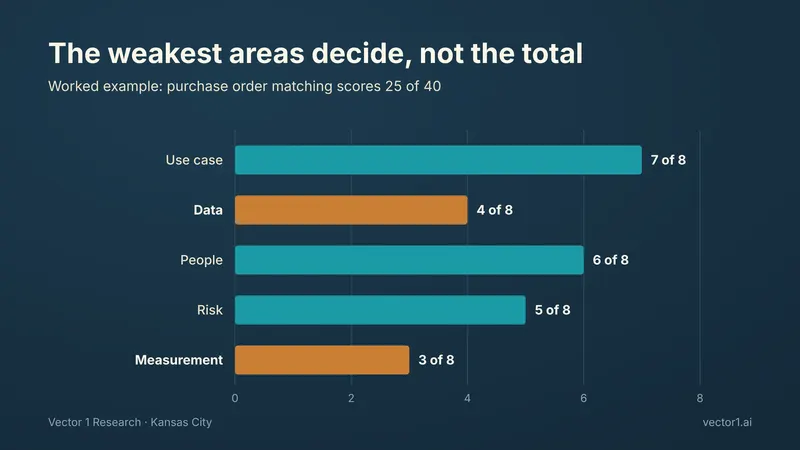
An AI readiness assessment answers one question: if you started an AI project next month, what would most likely stop it? The checklist below scores 20 questions from 0 to 2, for a total out of 40, across five areas. The total matters less than the weakest area, because a project fails at its weakest link.
How to score
For each question: 0 means no, 1 means partly or informally, 2 means yes and written down. Answer for one specific use case, not the whole company. Readiness for automating invoice matching is a different answer from readiness for a customer chatbot.
1. Use case (8 points)
- Can you name the task, who does it today and how often it happens?
- Do you know roughly what the task costs now, in hours or dollars a month?
- Is a wrong answer from the system cheap to catch and fix?
- Does one named person own the outcome?
2. Data (8 points)
- Is the data the task needs available in one place, or can it be pulled together on request?
- Do you have at least 50 past examples with the right answer known?
- Is it clear who is allowed to use this data, and for what?
- Does the data reflect how the task is done today, not two systems ago?
3. People (8 points)
- Will the people who do the task now help design the new process?
- Is someone available to check outputs during the first months?
- Does leadership agree on what success looks like?
- Has anyone on the team used AI tools for real work?
4. Risk (8 points)
- Do you know which regulations or contracts apply to this data and decision?
- Is there a point where a person reviews the output before it affects a customer or a payment?
- Can you switch the system off and return to the old process within a day?
- Has security reviewed which outside services the data would pass through?
5. Measurement (8 points)
- Will you measure the task as it runs today before changing anything?
- Have you set a threshold for success and one for stopping?
- Will the system run beside the current process before replacing it?
- Is there a plan to keep checking results after launch?
Reading the score
| Total | What it suggests |
|---|---|
| 32 to 40 | Ready to pilot, as long as no area scores below 5 |
| 20 to 31 | Ready for a scoped diagnostic; fix the weakest area first |
| Below 20 | Start with the use case and measurement areas; a build now would likely stall |
A worked example
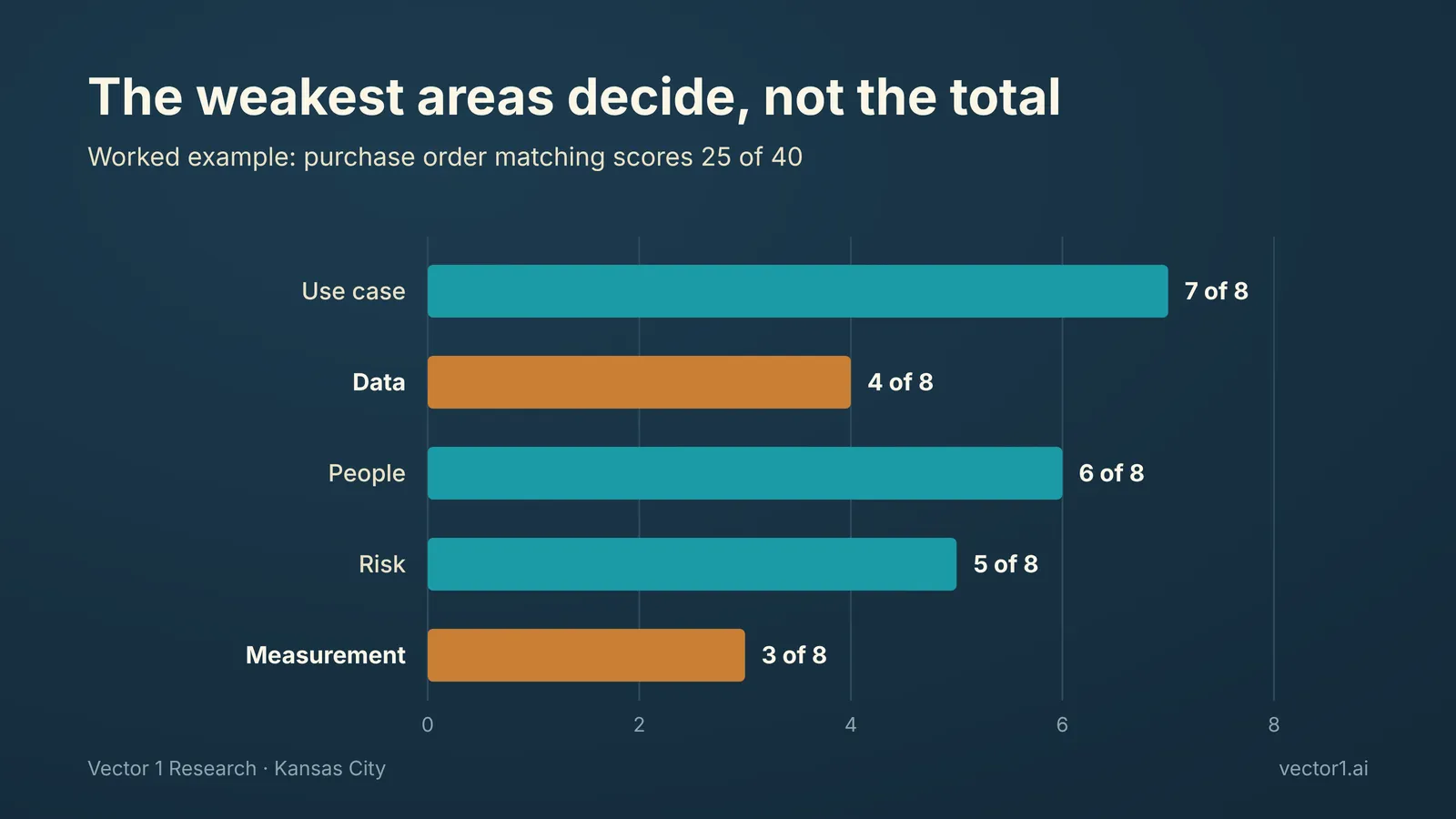
A distributor scores itself on automating purchase order matching: use case 7, data 4, people 6, risk 5, measurement 3, for a total of 25. The total says "ready for a diagnostic", and the area scores say where to start. Measurement at 3 means nobody could prove the system helped, and data at 4 means the examples to test it on don't exist yet. The first month's work is timing 50 recent purchase orders by hand and recording the error rate. That single step lifts both weak areas and costs almost nothing.
What to do with the result
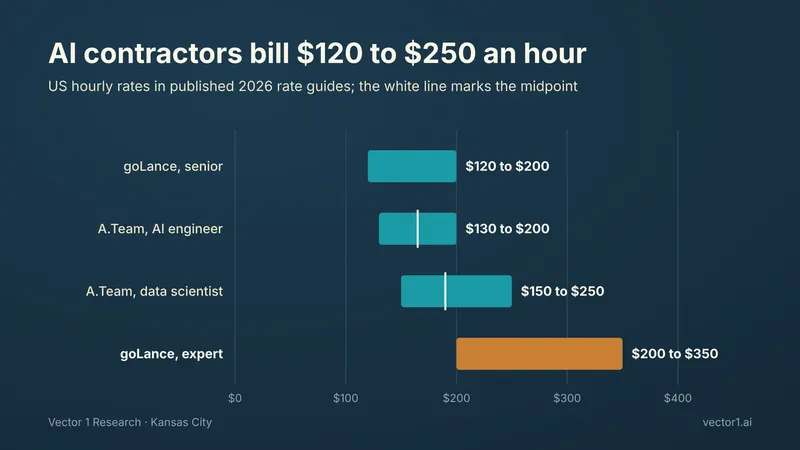
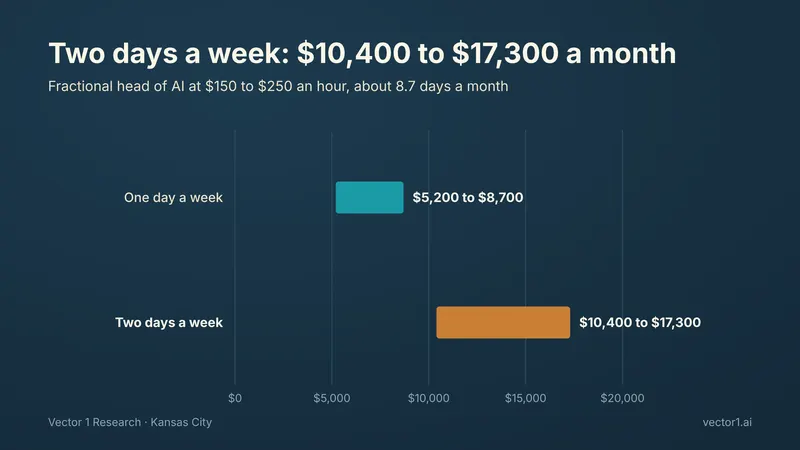
Take the two lowest areas and turn each unanswered question into a task with an owner and a date. Then re-score in 30 days. For what the outside help costs if you need it, see How Much Does AI Consulting Cost?. For measuring whether a pilot worked, see Did the AI Pilot Work?.